
By Uchenna C. Okeke
Every foster journey begins with a simple act of saying “yes” and sometimes that yes lasts a few weeks. Other times, it changes a life forever.
Welcome to Fosters Who Became Family, a series celebrating the unexpected bonds that form through fostering. These are stories of pets who arrived as temporary guests but became permanent members of the family.
PART 1: BERNIE – THE 2-WEEK GUEST WHO STAYED FOREVER
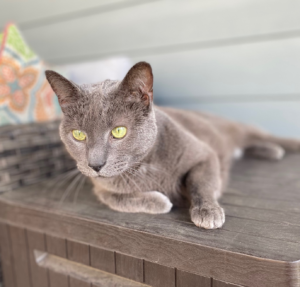
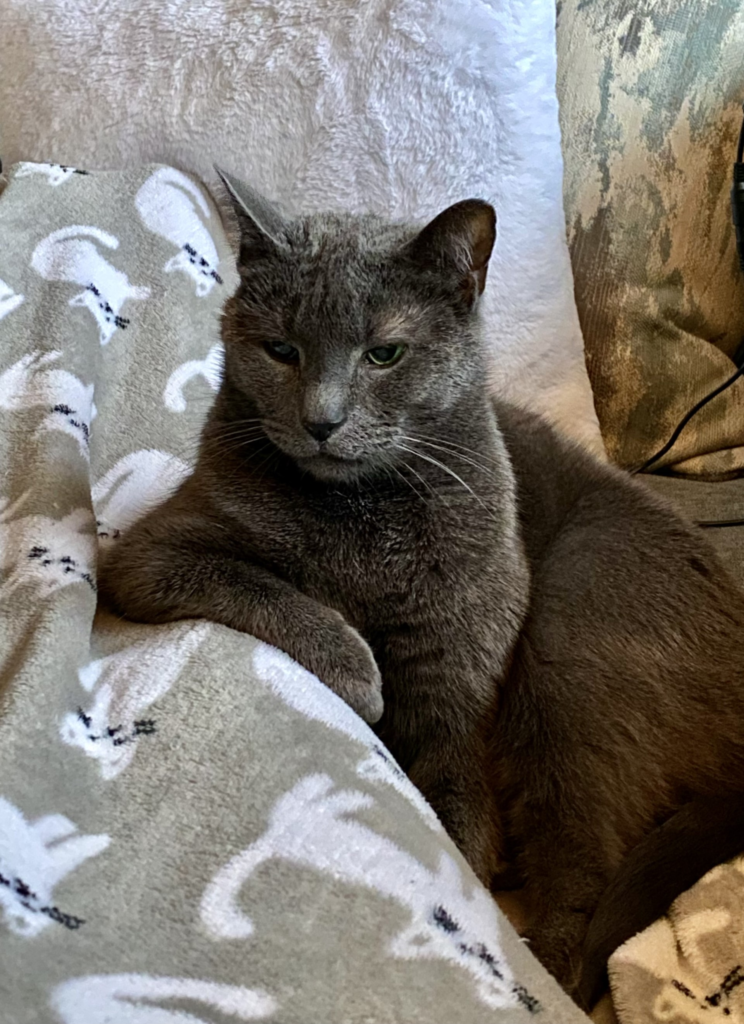
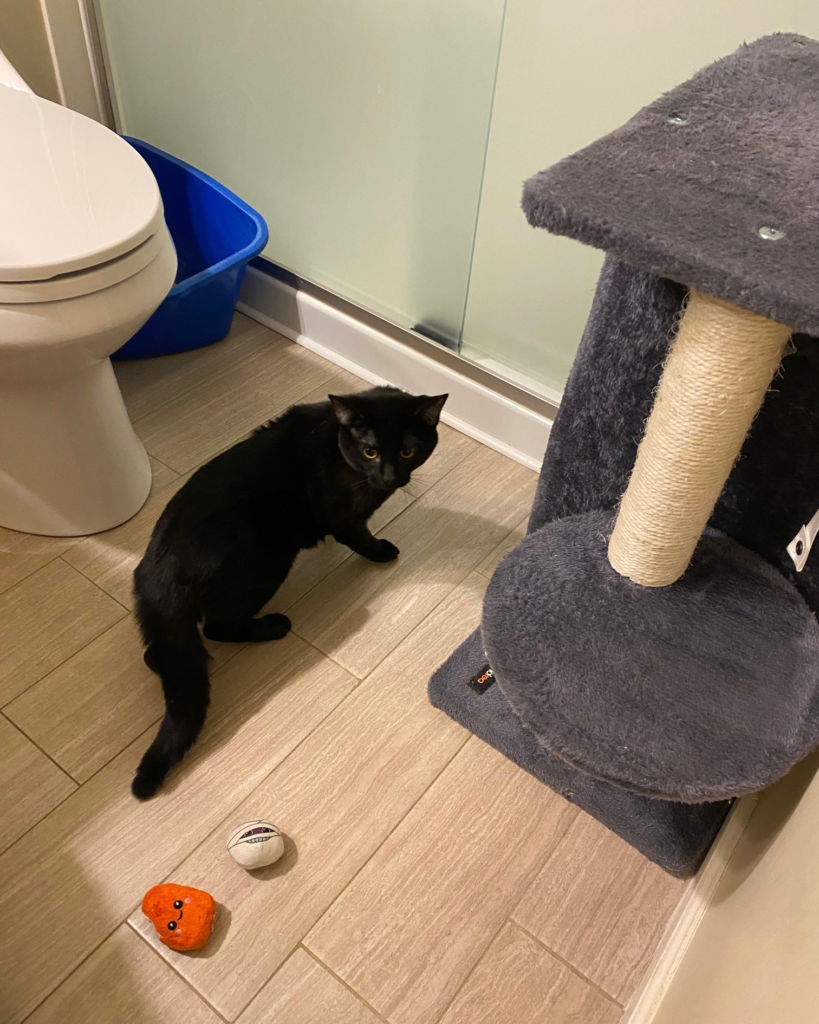
Bernie was foster number two for Anne and Tom. With full-time jobs and a calendar that included HSLC board meetings and other volunteer duties, they weren’t looking to add another pet to their family. They simply wanted to help. But from the day he arrived, Bernie made his position very clear. The bathroom. Behind the toilet. For 8 hours. He wasn’t being dramatic. He was terrified.
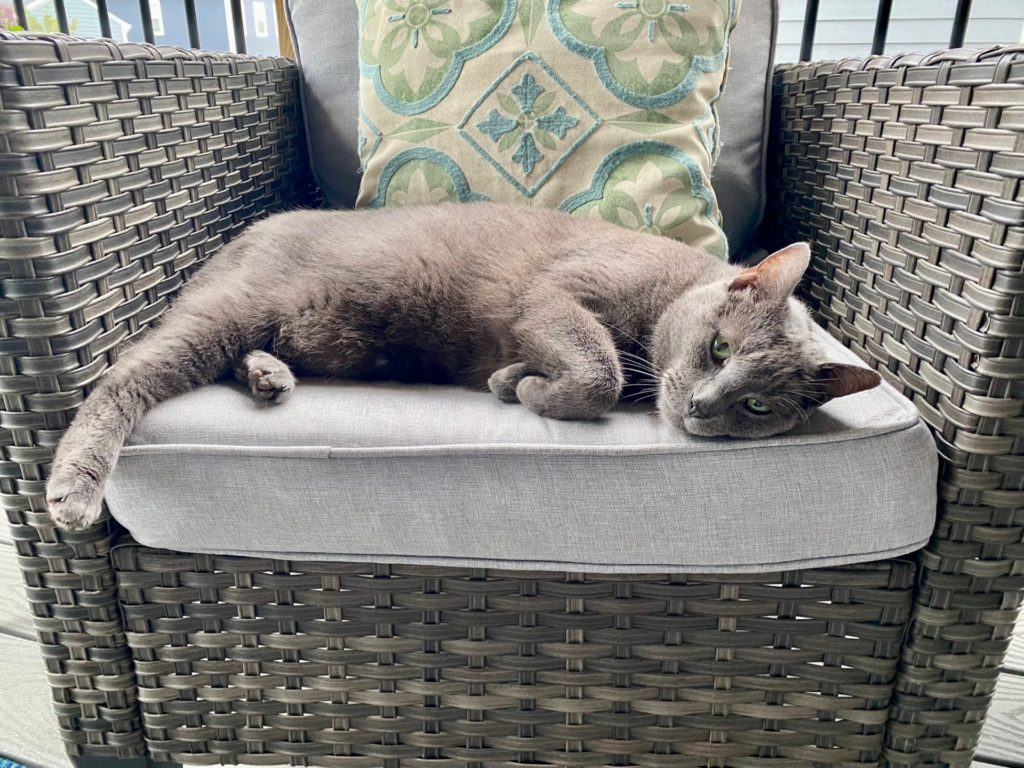
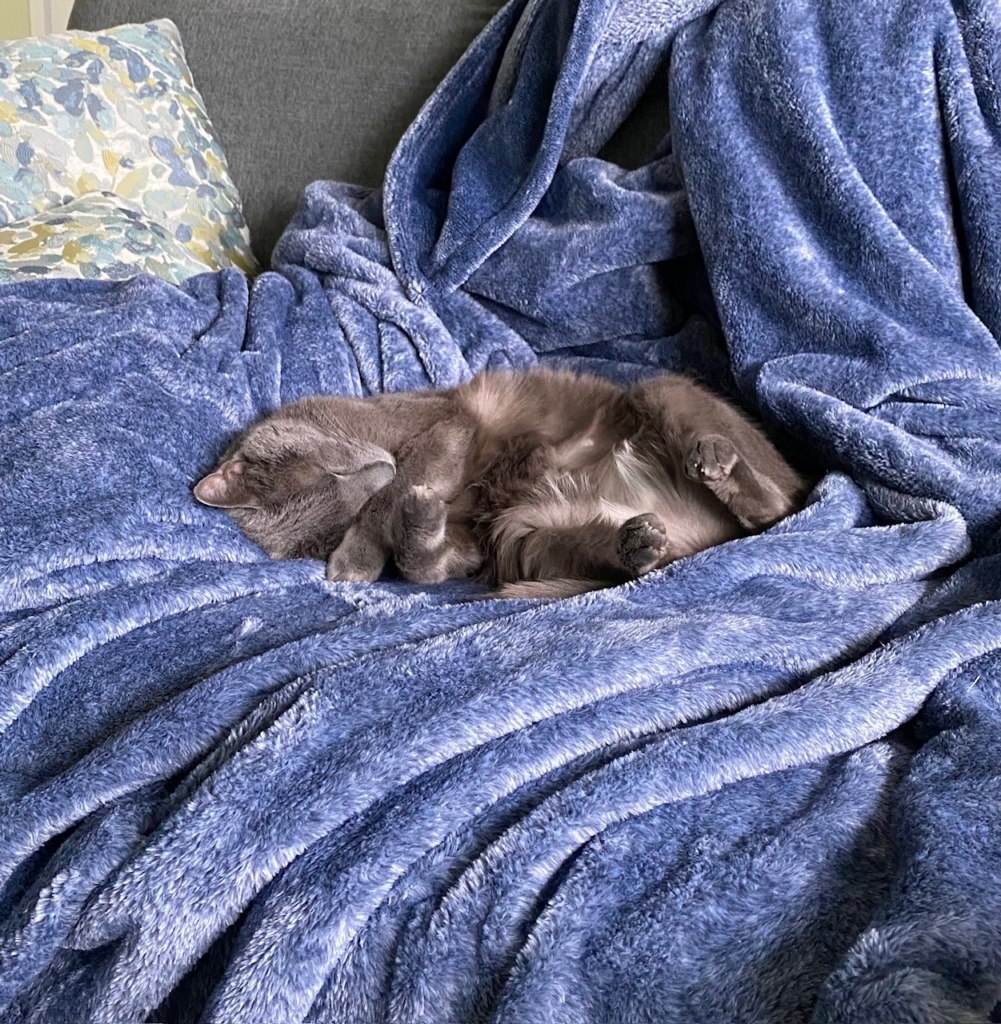
So, Anne and Tom waited. Left food out. Talked softly to a cat that looked away and ignored them. They gave him the one thing he needed most: time. By the evening, he decided to finally venture out from the bathroom, but the first few days were slow. He watched TV from across the room. He cautiously tested the couch and gradually learned that these people would not chase or harm him. Eventually, Bernie decided the humans weren’t bad. Trust, for Bernie, came in inches. Before long, he was joining them on the couch or at their desks, quietly becoming part of their everyday routine. He particularly liked the screened-in porch, his “catio,” where he could lounge on various chairs and cushions, enjoying fresh air and garden views, while hidden from unexpected visitors.
Then something shifted. Bernie had stopped feeling like a guest. He wasn’t just learning to trust Anne and Tom. They were quietly making room for him in their lives, too. The thought of Bernie going to someone else suddenly felt wrong. He had picked their couch, their quiet evenings, and, without anyone realizing it, a place in their hearts.
The decision to adopt wasn’t part of the plan, but by then, it was the only decision that made sense.
“We decided to keep him for ourselves. HSLC gives foster caregivers the right of first refusal,” Anne says.
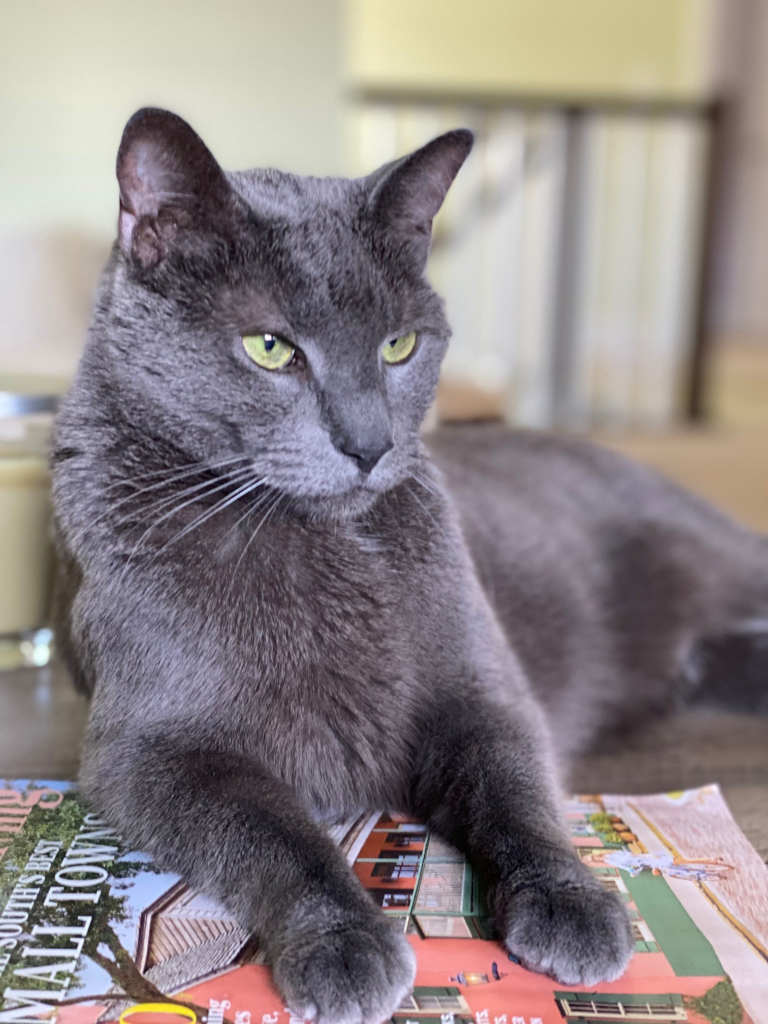
Today, Bernie is still very much Bernie. Doorbell rings? He’s under the bed before the chime fades. New guest? He’ll review their application and get back to them in a week. Other cats? Not in his contract. Bernie has made it abundantly clear that this is a one-cat household.
But give him access to his beloved catio, and he’s the happiest cat alive. In fact, Anne laughs, “He loves his catio more than life itself. Some nights, we have to pry him out of there!” By all accounts, Bernie is living what Anne and Thomas simply describe as “a good life.”
And that’s the thing about fostering. Fostering isn’t just about saving pets. It is about giving them the time, patience, and space to become who they’re meant to be. It is about learning that love doesn’t rush. It waits. It listens. It earns trust one small moment at a time. And sometimes, the ones who take the longest to let you in are the ones who leave the biggest paw prints on your heart.
Could your home be the place where the next foster story begins? Click here to take the first step.
Fostering Myths – Part 4
By Uchenna C. Okeke
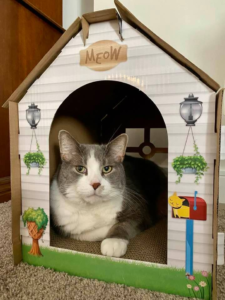
Myth 4: I Can’t Foster Because I Already Have Pets
Some people assume fostering isn’t an option if they already have a pet. They may think they need a completely pet-free home or worry their current pet won’t adjust well to another animal.
Fact: Having a Pet at Home Does Not Disqualify You from Fostering
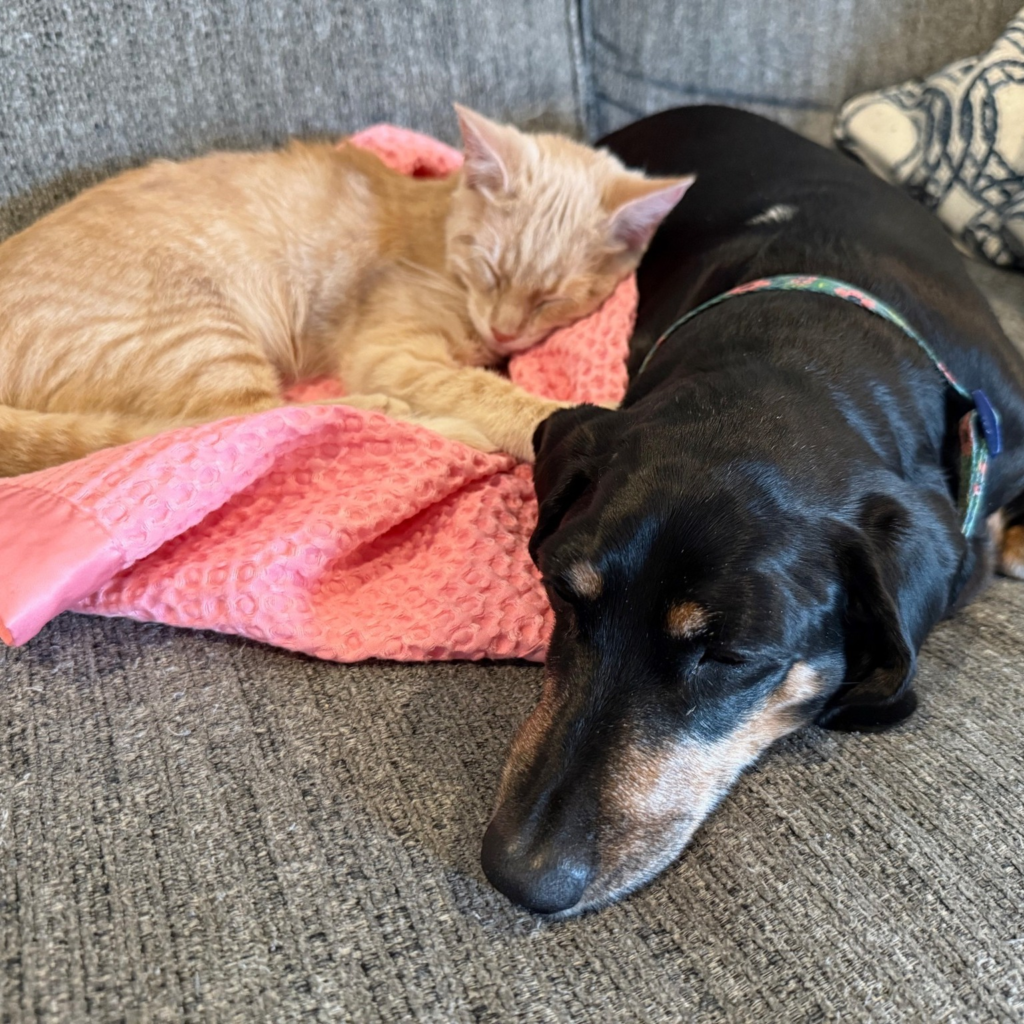
The truth is having a pet at home does not disqualify you from fostering. In fact, many successful foster placements happen in homes with resident pets, and the experience can benefit the foster pet, foster parent and resident pet alike in the following ways:
- Companionship and social stimulation for your pet: Many resident pets enjoy having a temporary companion to interact with, which can reduce boredom, encourage healthy activity, and even ease anxiety for pets that dislike being alone.
- Improved confidence for the foster pet: Positive experiences can help fosters become more social, patient, and comfortable around other animals.
- Emotional fulfilment for the foster parent: There is a unique sense of purpose and satisfaction in helping a foster animal feel safe, loved, and ready for a forever home.
- The opportunity to help without permanent commitment: Fostering allows people to directly save and support at-risk animals, even if adoption is not currently possible for them.
- A more enriching home environment: New routines, interactions, and experiences can bring fresh energy and engagement into the household for both pets and people alike.
How to Make it Work Safely
Every household is different, and successful fostering starts with finding the right fit. HSLC can help match you with a foster animal that works for your home. With a few thoughtful steps, fostering alongside a resident pet can be easier and more rewarding than many people expect. The goal isn’t to force instant friendship between pets, but to create a calm, controlled environment where both pets feel secure and can adjust at their own pace. Here are some suggestions:
- Create separate safe spaces: Give your resident pet and foster animal their own areas for eating, sleeping, and decompressing, especially in the first few days or weeks.
- Start with slow, controlled introductions: Don’t rush face-to-face contact. Allow pets to first get used to each other’s scent and presence in a neutral, calm setting.
- Supervise all early interactions: Keep initial meetings short and closely monitored so you can step in if either pet becomes stressed or overstimulated.
- Maintain your resident pet’s routine: Keep feeding times, walks, and personal attention consistent so your pet continues to feel secure and not overlooked.
- Watch body language closely: Signs of stress like growling, hiding, stiff posture, or excessive pacing should be taken seriously and used to adjust the pace of introductions.
- Communicate with the rescue organization: Be honest about how your pet is reacting. HSLC will help you troubleshoot or even adjust placements if needed.
- Go at the slowest pet’s pace: Progress should always be guided by the more cautious pet, not the more confident one.
Ultimately, having one pet at home should not discourage you from fostering. In many cases, it can create a nurturing and balanced environment where both the foster and resident pet can thrive. With the right preparation, patience, and support, fostering can become a rewarding experience that benefits everyone involved, including you. Learn more about fostering and apply today!
Fostering Myths – PART 2
By Uchenna C. Okeke
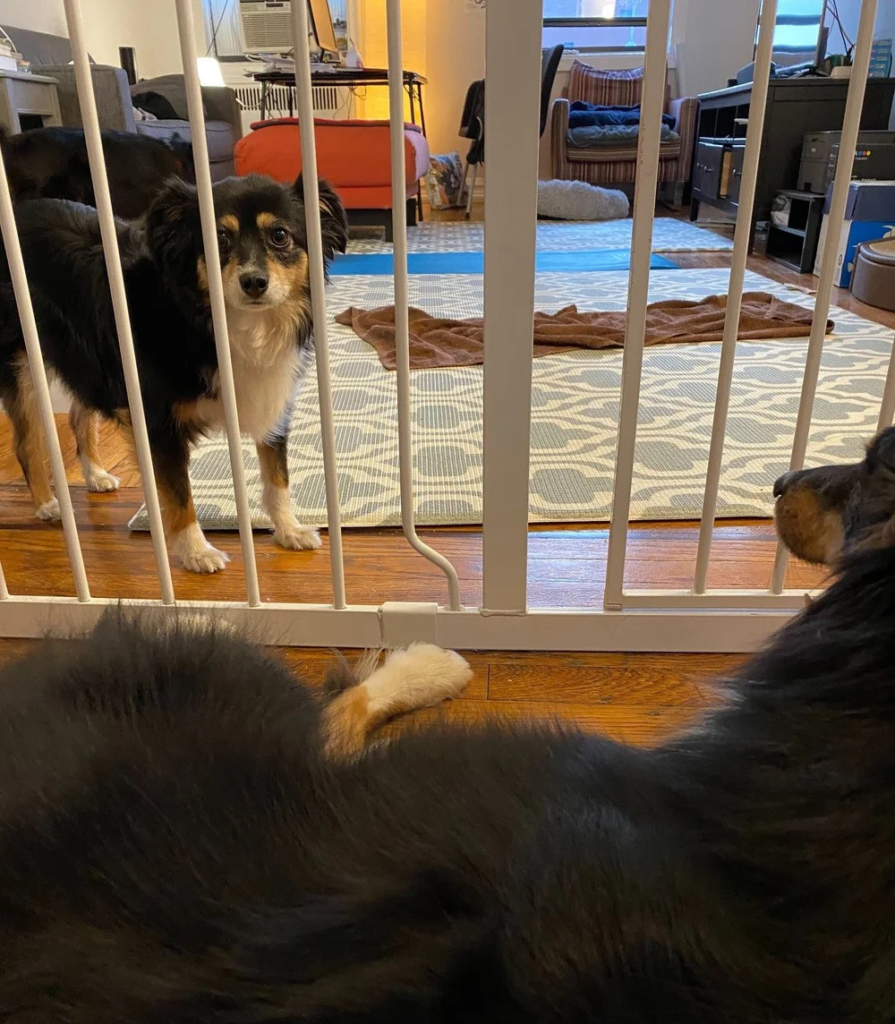
When it comes to making a difference, we often think big. But sometimes, it is the smallest acts of kindness that leave the greatest impression. Like opening your home to a pet in need, even if that home is a cozy apartment or a compact space.
Myth 2: You Need a Big House to Foster Pets
Many people imagine that fostering requires a big house with multiple rooms or a large outdoor area where pets can run freely. This worry may discourage some from volunteering, thinking their apartment simply isn’t big enough. But this is a myth.
Fact: Small Spaces Can Save Big Lives
Most foster pets simply need safety, stability, and temporary care while they wait for a permanent home. For many pets, a quiet and controlled environment is actually far more important than having a lot of space.
Why Small Spaces Work
While extra space can be helpful in some situations, the truth is that small spaces can work extremely well for pets in foster care. Here’s why:
Small Spaces Help Pets Feel Safe: New environments can make foster pets anxious. At first, they may be frightened or confused and a large, unfamiliar space can be overwhelming. A smaller, quiet space allows them to settle gradually.
Small Spaces Work Very Well for Cats: Naturally cats prefer small, secure areas where they can observe their surroundings while feeling protected. They often choose small spots like boxes, shelves, or enclosed corners. For foster cats or kittens, a small room such as a bathroom, bedroom, or enclosed corner can help them:
- Adjust slowly to new people and smells
- Locate their litter box easily
- Establish a feeding routine
- Feel less overwhelmed in a new environment
Small Spaces Benefit Dogs: Dogs need regular walks, playtime, and human interaction and not necessarily large living spaces. They can live happily in apartments or smaller homes as long as they receive regular exercise. Small spaces can be helpful to foster dogs because they:
- Encourage calm behaviour
- Help with crate training and house training
- Prevent overstimulation in a new environment
- Make it easier to monitor eating, sleeping, and bathroom routines
Easier Monitoring and Care: Small spaces make it easier for caregivers to observe pets closely. It helps them quickly notice changes in appetite, behavior, or health, allowing them to respond faster if something is wrong.
Better for Training and Routine: Pets learn routines faster in smaller environments. Feeding, sleeping, litter training, and house training are often easier when animals have clear, limited areas where these activities happen.

Tips for Fostering in Small Spaces
- Use Vertical Space: Vertical spaces allow pets to stay active and stimulated without needing a large room. Cat trees, climbing shelves, or window perches give cats places to climb, rest, and observe their surroundings.
- Create Cozy Zones: Designate quiet corners for your foster pet to rest. A comfortable bed, soft blanket, or small crate in a calm area can help pets feel secure and relaxed. Consistency is the key.
- Rotate Toys: Rotating toys every few days keeps them interesting and helps prevent boredom.
- Take Outdoor Breaks: Nearby parks, quiet streets, or open spaces can provide exercise and mental stimulation. These outings help balance indoor living and give dogs the activity they need while living in a smaller home.
Remember that the biggest needs of foster pets are basic care (food, water, and shelter), love and interaction, safety and comfort. Space is way down the list.
To learn more about fostering, please visit our website and complete a no-obligation application today.

“Please Help My Friends”
By Uchenna C. Okeke
What if your pet’s voice could go further? What if, after showering you with love and gratitude for all you do, they look up with gentle eyes and whisper, “Can you help my friends too?”
For every pet curled up on a warm couch, many others are still waiting – not just to be seen or admired, but to be chosen, taken in, supported and loved.
Why Other Pets Need Our Help
At the Humane Society of Loudoun County (HSLC), every animal taken in carries a story. Some have known fear, hunger, or loneliness. Some were abandoned. Some simply lost their way. Others were born into circumstances that gave them little chance at a good life.
But here’s the truth: these at-risk cats and dogs are not less deserving. They are simply waiting for their chance.
And that chance only comes through people like you. Behind every rescue are everyday people who chose to help. Whether by fostering, adopting, volunteering, or donating, each life saved begins with one act of kindness.
You don’t need to adopt a dozen animals to make a difference. Kindness takes many forms and everyone has something to offer. Ways you can help:
ADOPT
If your heart and home have room, adopting a pet is one of the most meaningful ways to change a life. When you adopt, you’re not just giving an animal a home, you’re opening the door to hope. If you’re considering adoption, HSLC is here to walk with you through the process and help you find the perfect match.
FOSTER
If you’re not ready for a long-term commitment, fostering allows you to be the bridge between homelessness and a forever home for an animal in need. Even a few weeks of your time can give an animal a chance to decompress and prepare for their happily ever after. HSLC offers flexible fostering opportunities, from vacation to emergency placements, so you can make a difference in a way that fits your life.
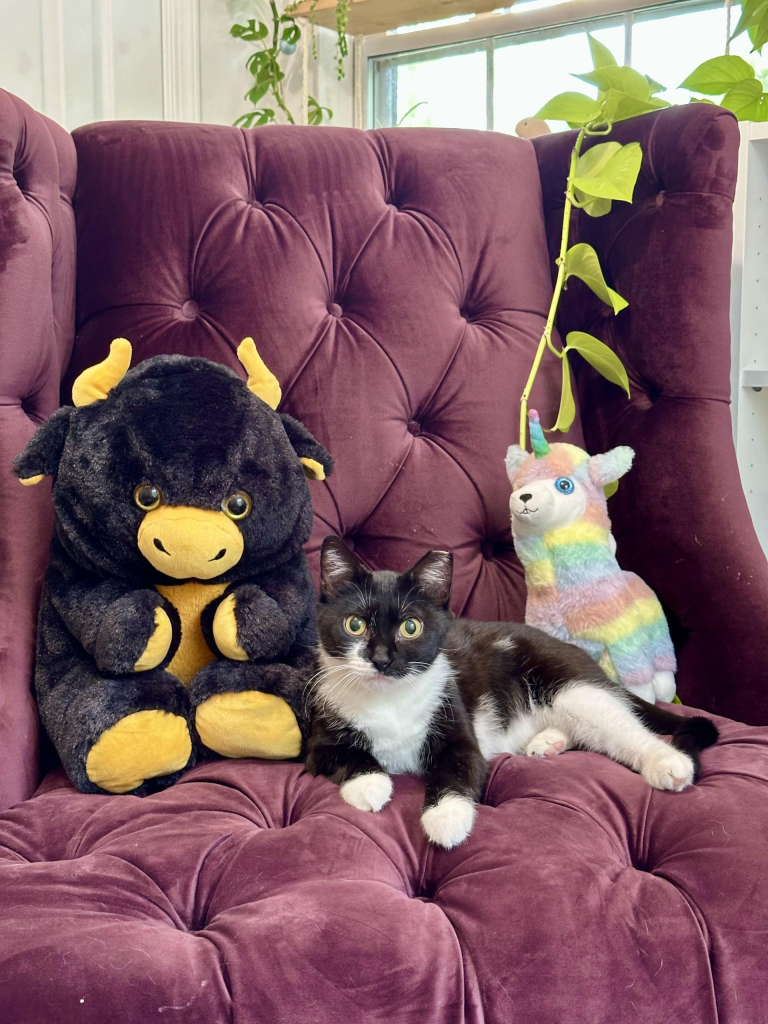
DONATE
Even if your home is already full, your heart can still give. Donations fuel HSLC’s work, covering everything from medical care to food for families in need. Whether it’s $25 for a microchip or a larger gift to cover veterinary costs, your generosity saves lives. You can also donate items from our wish lists, which directly lower operating costs and stretch resources to reach more animals.
VOLUNTEER
HSLC runs entirely on the passion and dedication of volunteers. That means every adoption, every rescue, every success story has people behind it who gave their time and skills. Animal care is one piece, but HSLC also needs help with events, fundraising, technology, and administration. Whether you’re an animal whisperer or a spreadsheet wizard, your contribution matters.
Every adoption, every act of kindness, every moment spent helping sets change in motion. There are animals waiting – waiting for a warm hand, a safe place to rest, a second chance. And the difference between waiting and belonging could be you.
And if your pet could step in here, this is what they’d probably say:
“I remember when I was waiting too, wondering if someone would ever come for me. There are still my friends out there, scared, hungry, or lonely. Please… help my friends.”
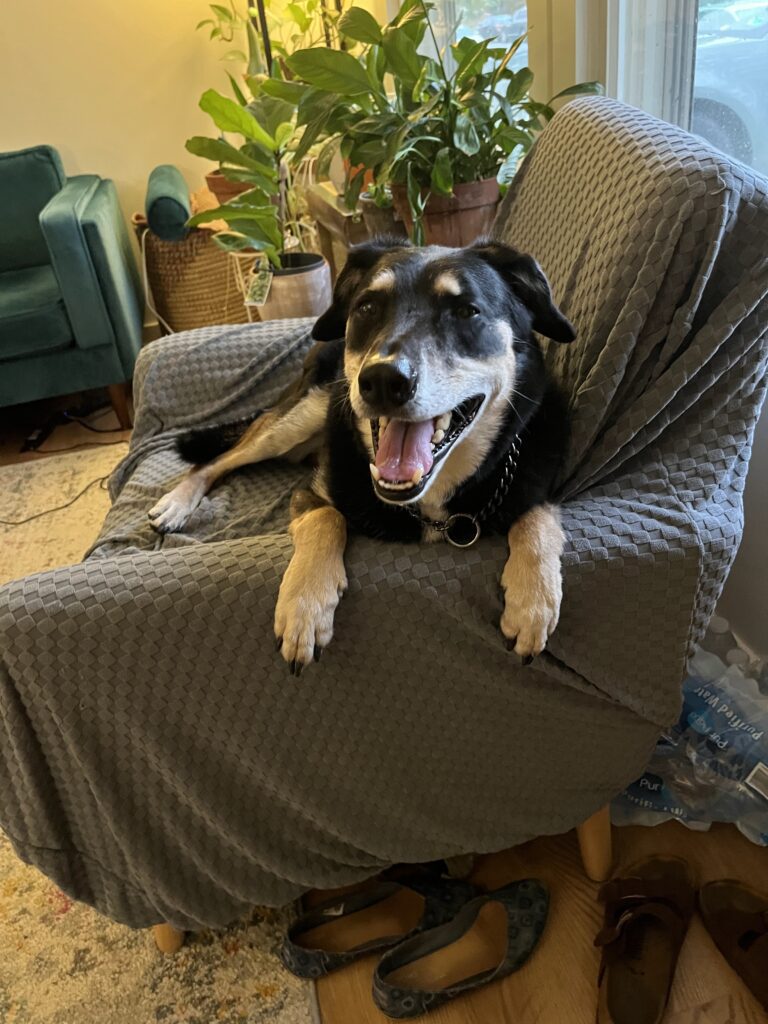

The Humane Society of Loudoun County (HSLC) is a foster-based rescue—which means we do not operate a physical shelter. Every animal we save depends on the availability of a foster home. Without fosters, we simply can’t take in animals in need. And right now, in 2025, we haven’t been able to take in a single new dog—due to a severe shortage of safe landings.
That’s where you come in.
Fostering is more than just providing a temporary place to crash. It’s a lifeline. It’s the bridge between what an animal’s life was—whether they were abandoned, neglected, surrendered, or at risk in a kill shelter—and the life they deserve in a loving, forever home.
Fostering:
- Helps animals decompress from the stress of shelters
- Increases their chances of being adopted
- Teaches them what love, safety, and routine look like
- Saves lives—literally
And here’s the best part: HSLC covers all medical care, and we’ll match you with a mentor who will support you every step of the way.

Fostering is also flexible. Whether you’re not ready for a long-term commitment or simply want to experience the joy of having a pet in your home, fostering gives you that opportunity.
Right now, we need dog fosters more than ever. Dogs who are waiting in shelters are counting on us—but we can’t say “yes” to them until someone like you says “yes” to fostering.
Please consider becoming a foster hero. You can fill out our no-obligation application here, or help us by spreading the word. Every share makes a difference.
Thank you for being part of the village it takes to save lives.
By Uchenna C. Ukeke
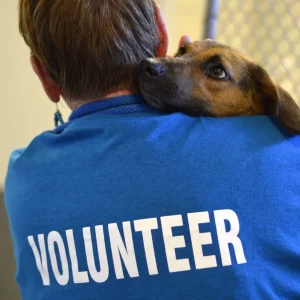
Volunteering is not just a simple act of kindness that benefits the community. It can also benefit you personally and professionally. And the best part? It doesn’t require wealth, fame, or perfection—just willingness. Discover how volunteering can unlock purpose and fuel growth in your life, while also enhancing the lives you touch.
Personal Growth
- Developing Emotional Intelligence: Volunteering exposes you to different perspectives and challenges, helping you develop empathy and resiliency. This increased emotional awareness improves your relationships and boosts your ability to connect and communicate with others in your life.
- Boosting Confidence: Volunteering is a powerful confidence booster. By dedicating your time and efforts to helping others, you gain a deep sense of accomplishment and self-worth. Seeing the direct impact of your work reinforces the value of your contributions, and this recognition enhances your belief in your abilities. Volunteering also helps you build new skills which can also boost your self-esteem.
- Finding Purpose and Fulfilment: By supporting causes that matter to you, like animal rescue, you become part of something greater than yourself. Volunteering provides meaning and fulfilment knowing that your efforts are making a real difference in the lives of others.
- Making Friends: Volunteering is a great way to meet new friends. As a volunteer, you’ll interact with people from diverse backgrounds and yet share a common interest. Some volunteers remain friends for life.
Professional Benefits
- Enhancing Your Resume/CV: Volunteering offers valuable hands-on experience that boosts your career. Whether you are managing a project or running an event, volunteering provides opportunities to refine existing skills and develop new ones, including leadership, teamwork, time management, and problem-solving. This practical experience can help fill gaps in your resume, especially if you’re changing careers, entering the workforce, or looking to climb the corporate ladder.
- Expanding Your Network: Volunteering gives you the opportunity to meet people from various professional backgrounds, whether it’s with fellow volunteers, community leaders, or like-minded professionals. These connections help expand your network and are valuable for both personal and career growth.
- Building Career Credibility: Volunteering demonstrates your commitment, passion, and reliability. It shows that you’re proactive, socially responsible, and willing to contribute beyond your job. These qualities not only benefit the causes you care about but also help your professional growth.
Volunteering with HSLC
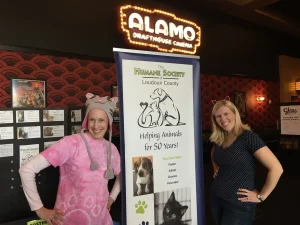
Volunteering with the Humane Society of Loudoun County (HSLC) offers you the chance to make a real difference—for animals, for the community, and for yourself. HSLC provides opportunities for meaningful engagement that supports both personal development and community impact.
Ready to find your purpose and grow through giving back? Click here for HSLC’s most pressing needs. If you don’t see something of interest, please complete an application and we will work to find a role that’s right for you!

It’s hard to believe but 2025 is just around the corner. Are you thinking about adopting one or two new animal-friendly habits in the new year? If so, we’re here to help. Below are just a few resolutions to choose from:
1) Keep your pets healthy by giving them regular checkups—at least once a year and keep current with vaccinations.
2) Make dental care a priority through daily brushing and regular professional dental exams and cleanings. As many as 85% of American dogs and cats show signs of dental disease by the age of three.
3) If you haven’t already, spay and neuter your pets. Doing so helps cut down on the number of homeless animals and keeps your pets healthier.
4) Give your pets plenty of attention. Animals left at home alone become bored and lonely. They can become destructive. Provide regular play sessions, walks for dogs, and petting and/or other appropriate interaction for all animals.

5) Go easy on the treats. More than 50% of our nation’s pets are overweight or obese and face a variety of health conditions, including heart disease, diabetes, arthritis, high blood pressure, and cancer.
6) Prepare for disasters—fires, floods, storms, and the like. Have an evacuation plan that includes your animal companions, and prepare a traveling kit to have on hand always.
7) Be a voice for the voiceless and use social media to encourage friends, family and co-workers to save a life by adopting, not shopping.
8) Fostering also saves lives. HSLC provides regular trainings for those who are interested in fostering. Contact us at foster@humaneloudoun.org if you’re interested in fostering or complete a no-obligation application on our website.
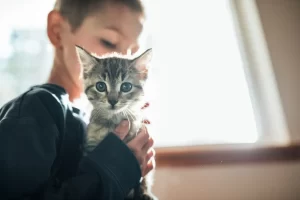
By Lauren Puckett
From the boy throwing a stick for his dog, to the girl cuddling up with her cat, there’s simply no bond like that of a child and his or her companion animal. Pets can play many roles in a child’s life, including playmate, cuddling companion, and friend. In honor of National Kids and Pets Day on April 26, let’s explore the many ways fostering or adopting a pet can benefit children.
#1 Pets improve mental health
Pets comfort us. But more than that, studies have shown they can improve our mental health. In fact, a 2015 study demonstrated that having a pet dog in the home was associated with a decreased probability of childhood anxiety.
#2 Pets teach valuable social skills
Pet ownership requires a child to love, care for, and treat an animal with respect. Playing with a cat or dog allows children to learn about reciprocity and “give and take.” Pets also teach boundaries, tolerance, and acceptance. These are all valuable skills that help a child learn how to interact with other living things.
#3 Pets impart a sense of responsibility
Children can learn responsibility by caring for a pet. For instance, they’ll learn to feed their pet, or in the case of a dog, walk it so it can take care of business. Plus, a pet needs training, which offers the opportunity to teach children about positive reinforcement.
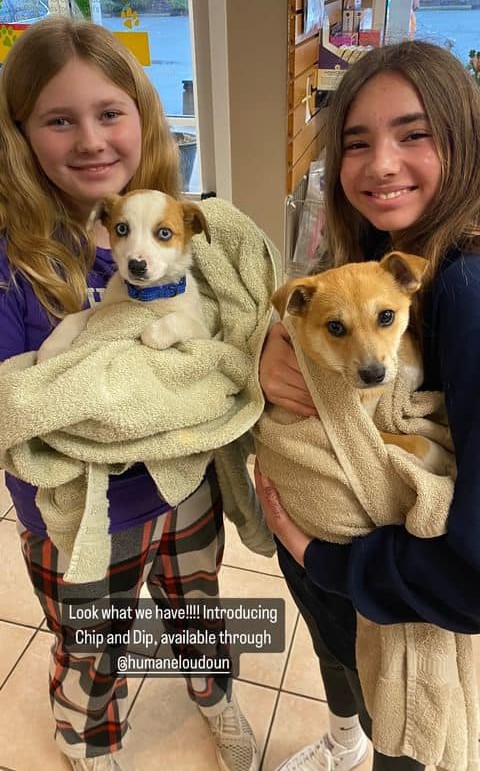
– Blaire Elizabeth Ring
#4 Pets encourage physical activity
Dogs require regular walks and outdoor time, encouraging physical activity for children. Even cats may enjoy a spirited romp about the house with their favorite child.
#5 Pets teach us about loss
As difficult as losing a beloved pet may be, this is a valuable teaching opportunity. It may be a child’s first experience with death, and they can learn useful coping skills for the future. Fostering a pet can also provide this lesson in a gentler way, as children say goodbye to a foster pet when it moves on to its forever home.
To introduce a cat or dog into your family, apply to foster or adopt an animal today.
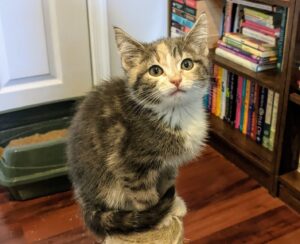
By Heather Nokes
“Kitten season” refers to the period from early spring to late fall when most kittens are born. This phenomenon is mostly due to warmer weather allowing stray or outdoor cats to venture out and begin procreating. Female cats become sexually mature as young as five months of age. In addition, because the gestation period for cats is only about two months long, they can have several litters in one year!
As kitten season ramps up, local shelters and rescues, like the Humane Society of Loudoun County (HSLC), are in dire need of kitten and cat fosters.
Why you should foster
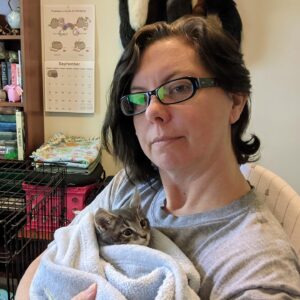
Andi, pictured with little Ramone, has fostered over 130 cats and counting!
Fostering kittens is a rewarding experience. As a foster, you save lives while enjoying all the adorable antics that make kittens irresistible. One of HSLC’s expert kitten fosters, Andi, has been fostering cats and kittens—over 130 in total—with her husband since 2012! She had this to say about her fostering experience:
“The best part [about fostering] is being able to watch them go from sickly to healthy or from angry/scared, hissy-spitties to lap-loving cuddlebugs.”
What to know before fostering
Andi states that while kitten fostering is fun, it can also be a lot of work. You must watch the little souls closely to ensure they stay safe. If something seems odd, do not be afraid to ask questions (HSLC has an awesome foster coordinator who can help!) Be sure to love them unconditionally, and be happy to see them go to great homes.
What you need to foster
Kittens should be isolated from other pets in the home until vetted and given a clean bill of health. This is why setting up a “home base” for them is important. If they are young, a large dog crate will work; if older, an entire room would be a better fit.
Your home base should consist of:
- Clean, fresh bedding that is easy to change and wash.
- Soft surfaces that are not too high up, nothing that a kitten could get stuck in (trash can, boxes).
- A shallow litter box with a small amount of non-clumping litter.
- Shallow water and food dishes that are easy to clean.
- A healthy and safe environment for their foster kittens; any cleaning products should be removed from the kitten foster room.
- Small, soft toys that are not easily ingested or torn apart.
Kitten Veterinary care
The Humane Society of Loudoun County will pay for the veterinary care of its kittens. The first couple of vet visits often include deworming and/or flea treatment. If the kittens are healthy enough, vaccines and FeLV/FIV tests may be conducted. HSLC also spays/neuters around 4 months of age. More complicated reasons for a vet visit include diarrhea, dehydration and upper respiratory infections. For these conditions, medications may be sent home with the foster to give the kitten regularly. A healthy kitten is a happy kitten!
Saying goodbye
Saying goodbye may be the hardest part of fostering. It is important to remember that this is why you fostered, for a happy, healthy kitten to find a forever home!
Interested in giving cat or kitten fostering a try? Complete a no-obligation application today!
By Lauren Puckett
Did you know that performing an act of kindness actually ignites a chemical response in your brain? That’s the positive feeling you get when you do something for someone else, and it’s been coined the “helper’s high.” Beyond the momentary euphoria you enjoy, greater health and increased longevity have also been associated with this psychological state.
Here are four ways you can do a good deed (or two!) for the Humane Society of Loudoun County (HSLC) and get your own helper’s high in the new year!
DONATE
At HSLC, we are not funded by any county, state, or federal organizations. Our work is only made possible because of donors like you. Your tax-deductible donations make things like this possible:
- $20 provides two pet food kits for families in need, or two community cats enough kibble for a month
- $50 vaccinates an animal for rabies or provides five pet food kits for families in need
- $75 covers a sick exam for a foster animal
- $200 provides 20 pet food kits for families in need
- $1,000 covers the average medical cost for a foster animal (in 2022).
In addition to providing financial support, you can donate an item or two from our various wish lists. In-kind donations from these lists help to lower our operating costs, freeing up funds to save more animals.
Dig Deeper
For more information, read “When you donate, where does your money go?”
VOLUNTEER
As a volunteer-based organization with no paid staff, HSLC relies on volunteers to carry out our life-saving mission. We need many folks focused on animal care, of course, but we also need volunteers to cover the business side of the organization: finance, technology, fundraising, marketing, events and administration. Our immediate needs include fosters and volunteers to support our expanding dog foster program.
FOSTER
As a foster-based organization, we do not have a physical shelter. We can only save animals when we have a foster home to place them in. Foster families provide a healthy and safe environment for the animal. Fostering increases the animal’s chances of being adopted and helps them overcome the stress of being abandoned in a shelter. When you open your heart and home to an animal in need, you are giving them a second chance at life. Types of fostering include:
- Regular fostering
- Vacation fostering
- Emergency fostering
- Short-term fostering
- Special needs fostering
To become a foster, please complete an online application.
ADOPT
Each year, shelters and rescue groups take in millions of cats and dogs nationwide. “Moving” and “landlord issues” are the top reasons people give up their pets. This means organizations like HSLC have dozens of animals in their care who are anxiously waiting to meet their forever families. We hope that HSLC will be your first choice when choosing a companion animal. All pets adopted through HSLC come with the following benefits:
- Spaying or neutering at the appropriate age (even if it’s after adoption)
- Current on their vaccinations
- Microchipping
- A lifetime of post-adoption support
- Information about the animal’s behavior in a foster home environment
If you are interested in adopting, be sure to check out our available animals!