
By Kathleen Silver
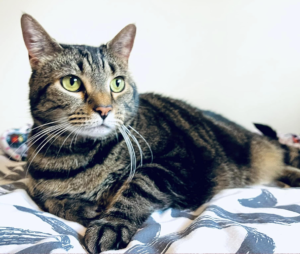
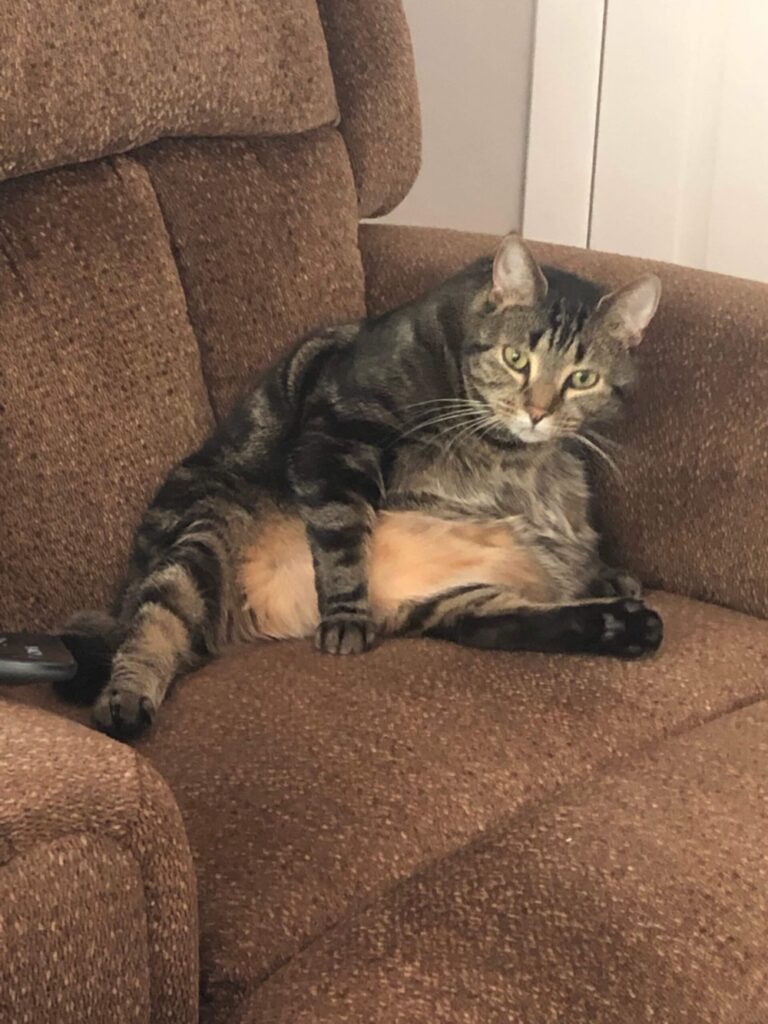
Recently, a kitty adopted from HSLC four years ago was returned to us. Unfortunately, Mindy’s family developed allergies and couldn’t keep her. Mindy, a gorgeous Tabby, also has one issue other than needing a new home: Obesity. She can’t effectively clean herself with so many extra pounds. Her coat was matted and dull by the time she came to HSLC. Mindy’s foster parent supposes that her previous home may have free-fed the companion animals in the house; therefore, it’s likely that Mindy snacked — a lot.
A Little On Obesity
Attempting to get a food-driven kitty like Mindy not to overeat may be challenging. After all, it can be difficult to resist the constant meowing and big round eyes. But obesity in cats and dogs is one of the top dangers leading to diabetes, intra-abdominal cancers, heart disease, and hypertension. Furthermore, with disease comes extra veterinary costs for medications and tests and an increased risk of complications from anesthesia if a pet ever needs surgery. Obesity is common in older indoor pets that are not as active as they were in their early years and can lead to osteoarthritis, degeneration of joints, and bladder stones. Overweight pets are more likely to have shorter lives and tend to interact less with their families physically. They can be more lethargic, so it is easier to miss early signs of illness.
When a cat or dog is heading toward severe weight gain, it is time to acknowledge the situation. It is imperative to consult with a veterinarian on the correct approach to helping your companion animal lose or maintain weight so obesity doesn’t creep into their life. Simply cutting the amount of food may not be the ideal approach. It’s possible to cause a cat or dog to become malnourished by cutting food. What’s best is to talk to your veterinarian about the type, frequency, and portion sizes of the new food to facilitate weight loss. Then, it is the pet owner’s job to be consistent with the food and resist the temptation to give treats.
Introducing a pet to a new food takes time. Most pets like their routine, and changing it can cause them to retreat and become moody. Take the first 2-3 weeks to mix their everyday food with the new food. The goal is to wean them off the old food and habituate to the new, healthier diet.
Exercise is another feature to help an obese or overweight animal. However, exercise must begin slowly if the pet usually doesn’t move much. Even if a cat or dog lays on its back batting at a toy — that’s some exercise! Many people might say, “My pet won’t play.” But, with some trial and error, you will find an activity that your pet will enjoy. Once you find it, commit consistently to playing with your cat or dog for 5-10 minutes daily, more if possible. As time passes, your pet will eventually become more interested and may even seek you out for a few more minutes of playtime.
Back to Mindy’s Story
As for Mindy, she now eats a special low-carb diet to give her the best life possible and to reduce her weight. Mindy’s foster parent, Stephanie, reports that in only four weeks, Mindy’s coat has regained most of its former sheen, and she’s back to grooming herself.
Mindy is great with children and other cats; she tolerates dogs. Miss Mindy always finds a way to curl up on a lap. She craves attention and loves cuddling. However, Mindy won’t do well with a home that free feeds. She will need her meals on a schedule. Stephanie also says she doesn’t beg for food between meals, likely due to the high-quality food she’s now eating.
Mindy plays with toys and loves to interact with people and children. She has the most fun chasing plush toys with sounds or bells and hunting ribbons and string. Mindy is very friendly and ready to find her new home.
February 2023 Update: Mindy has been adopted! However, you can click here if you’re interested in adding one of her friends to your family!
By Hannah Feeley
I recently had the pleasure of speaking with three fosters for the Humane Society of Loudoun County (HSLC). They each shared their stories and advice for new foster parents.
Meet Tyler
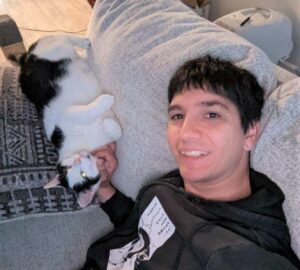
Tyler and his roommate, Katie, started fostering during the pandemic and have fostered 14 cats thus far with HSLC. They initially started fostering to cope with COVID-19 pandemic isolation and the emotional toll but continue to foster because it’s meaningful and fun.
Tyler mentioned the potential financial toll of fostering. Although HSLC covers all vet care expenses, it relies on the community to donate food and supplies. Otherwise, the fosters cover these costs which can add up. But Tyler and Katie have felt that the costs are worth it.
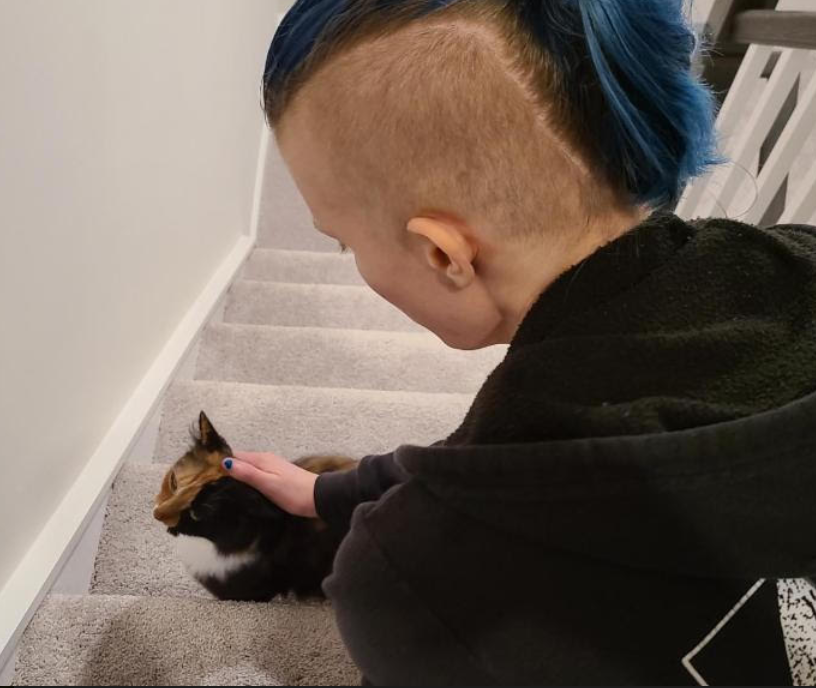
Despite both working full-time, Tyler and Katie still find time to play with and socialize the cats to get them ready for their forever homes. Katie, for instance, sets aside arts and crafts time with the cats.
Tyler recommends that new foster parents reach out to their animal rescue for advice. He highlighted that our HSLC family has given him great guidance with each animal.
Meet Jamie
Jamie and her two daughters recently became short-term fosters for HSLC. She is a homeschool parent, with two senior dogs.
Jamie was volunteering for HSLC as a cat condo caretaker at a local pet store. When the cats in the condos needed a break, her kids encouraged her to take the cats home. Both Jamie and her kids noted the incredible feeling of letting the cats decompress for a few days. Plus, they found the experience to be really fun.
Jamie emphasized that cats do not need a lot of space; whatever room you can provide may actually be more than they’re used to. She appreciates the flexibility of short-term fostering as it allows her to help the animals without making a lengthier commitment.
With the holiday season upon us, HSLC is currently in need of short-term and vacation fosters. So, if you’re considering fostering, this would be the perfect time to give it a try.
Meet Carol
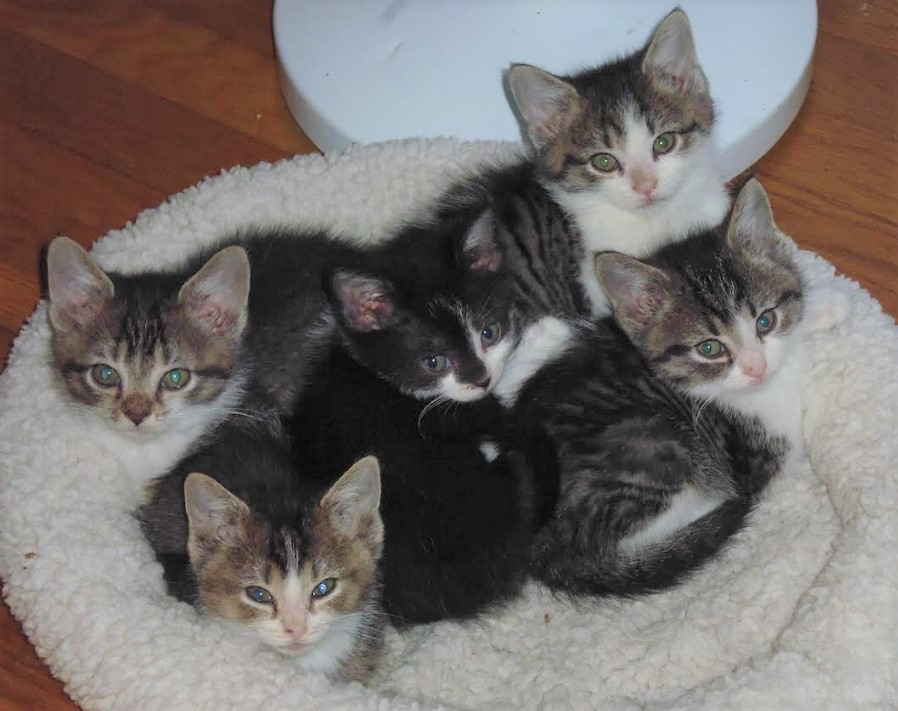
Carol is retired and has fostered cats with HSLC since 2018. Carol was initially introduced to fostering by a friend and hasn’t looked back since.
In explaining to me why she fosters, the joy in Carol’s voice was evident. – she does it because it’s enjoyable. Carol has also made (human) friends by fostering. Each time a foster cat is adopted, she makes a new friend with the adopter who sends updates about the cat’s wellbeing.
As a long-term foster parent who often takes in mistreated animals, Carol’s advice for new fosters is short and sweet: be patient. Spend time with the animals but have the patience to allow them to come out of their shells on their own.
Some people fear they won’t be able to give up the foster animals when the time comes. But Carol’s mindset is different: the more animals she can foster, the more animals she can help find homes. It’s a beautiful process and Carol is enthusiastic about her next foster.
If you’re interested in becoming a short or longer term foster, please contact us at foster@humaneloudoun.org or complete a no-obligation online application.

As a foster-based, all-volunteer organization, the Humane Society of Loudoun County relies on the community to provide homeless animals the second chances they deserve. Here are five “paw-some” ways to help our furry friends this holiday season.
1. Go Shopping
When you do your holiday shopping at Amazon Smile, please designate The Humane Society of Loudoun County as your charity. While on Amazon, be sure to check out our kitten registry and charity wish list. We also have a wish list on Chewy.com.
2. Support Giving Tuesday
This international day of giving on November 29 is the perfect time to “paws” and make a life-saving donation to HSLC. The more funding we have, the more animals we can help!
3. Become a Guardian Angel
Maybe you’ve fallen in love with one of our animals but can’t adopt. Or perhaps you see a cat or dog that has been on our website for a while but hasn’t been adopted. Sponsoring an animal’s adoption fee, in part or full, will increase the odds that they will find a loving “fur-ever” home in the near future.
4. Donate Your Vehicle or Property
Got a vehicle you want to unload before the new year? Consider donating it to HSLC. We offer free pick-up for donated vehicles of all types—cars, trucks, boats, and even ATVs. We also launched a real estate donation program this year to support our life-saving mission.

5. Give through a Donor Advised Fund (DAF)
More and more supporters are using DAFs to manage their charitable giving. They combine the most favorable tax benefits with the flexibility to support your favorite causes, like HSLC.
Thank you for helping animals in need this holiday season and throughout the year.

By Roman Freeman
You can see them all the time, if you’re looking – in the grocery store, at the mall, and in restaurants. We know that Service Animals get special privileges; but what are the rules? Who can have them? And when is an animal a Service Animal?
Americans with Disabilities Act
To understand the rules of Service Animals in the United States, we need to take a look at a set of federal laws known as the Americans with Disabilities Act (ADA). You may have heard of this before. For one thing, this is the legal precedent under which businesses are prevented from firing employees because of mental or physical disability. One of the many other things this set of laws covers is Service Animals.
It is important to note that the Americans with Disabilities Act is the one and only federal legal authority on what is and is not a Service Animal in the United States. Currently, there is no rule within the ADA that requires Service Animals to be registered or to have paperwork proving their Service status. This also means that there are no legal registries or certifications in this country on a federal level. Anyone can print off a card or a paper packet that says their animal has been “certified” as a Service Animal. But legally, this means essentially nothing.
Service Animal Defined
Then, how is it decided what is legally considered a Service Animal? The ADA states the following qualifications:
- A “Service Animal” is a dog that is individually trained to do work or perform tasks for a person with a disability.
You can see a list of some examples of work and tasks a Service Animal might perform (in addition to guiding the deaf or blind, or alerting to episodes of health conditions such as diabetes or seizures) here. You may also view a legal definition of disability and some conditions that may be recognized as a disability here.
- The work or tasks the dog is trained to provide must be directly related to the person’s disability. Dogs who function solely as comfort or emotional support do not qualify as Service Animals under the ADA.
Emotional Support Animals are, however, considered Assistance Animals and therefore legally receive housing rights. While Service Animals receive both the rights to live in any facility their handler occupies as a residence regardless of rules about pets on premises, and the rights to accompany their handler anywhere the general public is allowed to go; Emotional Support Animals (ESA’s) do not legally receive public access rights to be present in places like grocery stores or offices which do not otherwise allow pets on premises. When it does not directly conflict with a person’s housing rights regarding the Animal, an individual site can decide whether an ESA is allowed on premises.
- A Service Animal must be under control of its handler at all times. Service Animals must be harnessed, leashed, or tethered, unless this interferes with the person’s disability or the associated work the dog does. If they are not in some form tethered to their handler, the handler must keep control of the dog at all times with voice, signal, or other effective controls.

Summary
In short, a Service Animal is legally any dog trained to actively perform work or tasks to mitigate a disability, without presenting a danger to the public in any way and kept under control by its handler at all times. There are no rules at a federal level about breeds, certifications, registries, or training methods. You can view more about these laws and others at the ADA website.
By Kailyn Carr
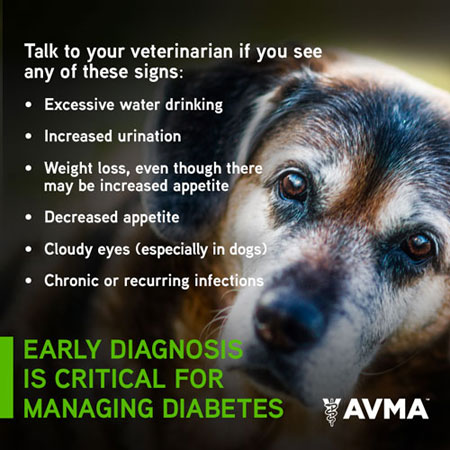
As is the case with people, our furry friends are subjected to a variety of medical conditions as they get older. One of the most common diseases impacting aging and obese pets is diabetes mellitus. Many people are intimidated by the idea of adopting animals with diabetes, thinking that the disease cannot be successfully managed. But, with proper care and treatment, diabetic dogs and cats can live long and healthy lives.
Animals adopted through the Humane Society of Loudoun County (HSLC) will have a medical record noting any pre-existing diseases, including diabetes. I highly recommend fostering or adopting a pet with diabetes. Consider their condition an opportunity to provide extra love and support to animals that may not have been shown that kindness before coming into your life.
Spotlight on Oreo
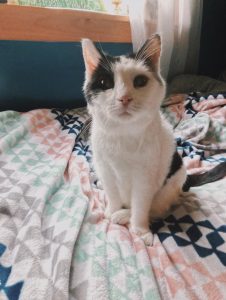
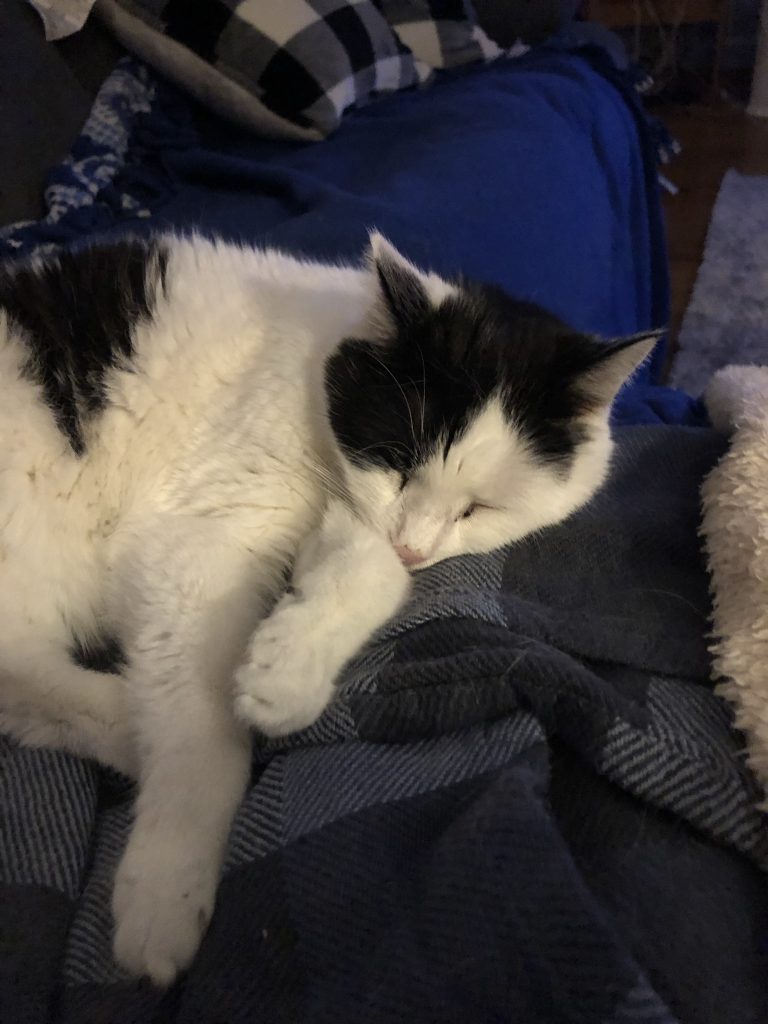
Pets with diabetes have a very special place in my heart because I happen to have one of my own. Oreo is an older cat at the sprightly age of 13; he has been a part of my family since he was just a few weeks old. He was diagnosed with diabetes about 2 years ago after we noticed he had been losing large amounts of weight. While we had to adjust to caring for him, there was never any doubt that we would do everything we could to make him as healthy and happy as we could.
Ever since the diagnosis, Oreo has thrived on his medications and adjusted feeding schedule. Moreover, he remains the lovable, cuddly, attention-seeking (for all of the right and wonderful reasons), and vocal cat that we grew up with. We sometimes forget that he’s a senior cat when he shows so much youthful energy while playing with his toys.
Caring for Pets with Diabetes
- Do your research using credible sources like PetMD and AVMA.
- Listen to your vet as they will know your pet’s history. Don’t be afraid to ask them questions about diet, exercise and medication.
- Monitor your pet’s weight and behavior on a weekly basis. If you notice any dramatic shifts, contact your vet immediately.
- Be patient as you and your pet adjust to a new care plan.

The Humane Society of Loudoun County (HSLC) will be at the Alamo Drafthouse at One Loudoun for CatVideoFest – the world’s #1 cat video festival! Come early and stop by the HSLC tables for free giveaways, HSLC merch and…fingers and paws crossed…CATS! Also, Alamo will be donating a % of gross ticket sales to the Humane Society of Loudoun County!
Times and tickets: https://drafthouse.com/northern-virginia/show/catvideofest-2023
More about CatVideoFest: CatVideoFest is a compilation reel of the latest and best cat videos culled from countless hours of unique submissions and sourced animations, music videos, and classic internet powerhouses. CatVideoFest is a joyous communal experience, only available in theaters, and raises money for cats in need through partnerships with local cat charities to best serve cats in the area.
This is just a sampling of the many businesses and individuals who have donated items in support of HSLC’s Christmas in July online auction. The auction will take place July 15-24 and all proceeds will directly benefit homeless and at-risk animals in our community.
By Anne Senft
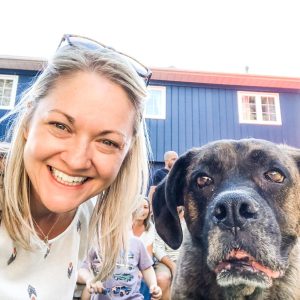
Blaire Ring has been a foster mom with the Humane Society of Loudoun County (HSLC) since 2014. When I reached out to her to request an in-kind donation for our upcoming online auction, she didn’t hesitate. Blaire immediately offered what is sure to be a popular item: a photo session and gift through her business, Second Ave Photography.
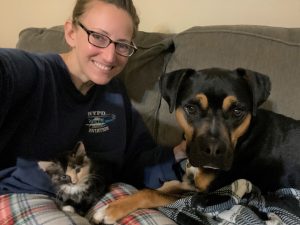
“I donated because fostering has been such a rewarding experience for my young daughters. They see us take in often dirty, sometimes sick, tiny kittens and bring them back to health. HSLC is near and dear to my heart and I’m so glad to be part of this group.”
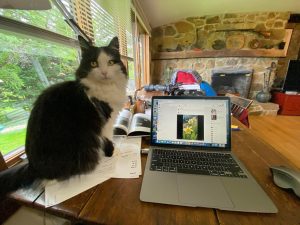
Likewise, Richard Busch didn’t miss a chance to help the animals. His Glenfiddich Farm Pottery is located in a converted 175-year-old former dairy barn “where the chickens and roosters have names, so they are not destined for the soup pot.” Glenfiddich (pronounced glen-FIDD-ick) is the Celtic word for “valley of the deer,” which is appropriate since deer and other wildlife are frequently seen here. Pots are stamped with a deer symbol, including the five items Richard graciously donated to the HSLC auction.
Dr. Christy Cowell of Loudoun Dental Smiles adopted Dempsey, their now 10-year old Boxer-hound mix when he was just a pup. “He’s my very first dog and the first love my husband and I shared together. He is such a sweet boy but needed the love from our family to live his best life.”

Dr. Cowell is thankful to HSLC for helping the special animals in our community who need extra love and support. She has generously donated a gift basket with a teeth whitening kit and professional in-office whitening session.
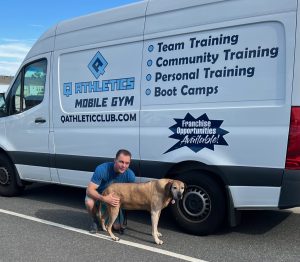
Bobby Quarantillo is the Owner of Q Athletics, a training company that works with athletes and adults in Leesburg and Ashburn. As a lifelong dog lover, his face lights up when talking about his senior dog, Sloan. Bobby donated a handsome gift basket with tech t-shirts and FitVine wine to help animals in need.
HSLC is sincerely grateful for all the individuals and businesses who have donated in-kind products and services to the auction which will help raise much needed funding for the homeless and at-risk animals in our community.
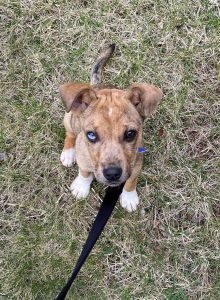
Want to make the world a better place in one easy step? Foster a dog or cat. It’s a crucial part of the animal rescue world. It’s also amazing, for you and for the animals. Pets are much more likely to have successful, life-long placements in new homes when they come from a loving foster home.
What does it mean to “foster” an animal?
A foster home is a home (like yours!) that provides temporary shelter, care, and love for pets while they are awaiting placement in a new “forever” home. As a foster family, you will take a rescued dog/cat into your home, based on the information you provide to the Humane Society of Loudoun County, your needs as a family, and the needs of the animal.
What makes a good foster home?
If you have some experience with dogs or cats and have a basic understanding of their needs . . . you are a good foster candidate! Dogs and cats are just looking for a little love, meals, walks (dog), and a safe place.
You will care for a foster dog or cat as you would your own pet — providing food, shelter, companionship, and exercise; arranging for pre-approved veterinary care; and supplying patience and love. There may be times you will be asked to house train or work with a dog using simple training techniques or provide socialization for a kitty. HSLC is always there to help.
Some animals may not get along well with other dogs, cats, and/or children. We will work to identify this prior to placement in your home. At the same time, animals will sometimes behave differently in one environment than they do in another. Your observation of the animal’s character and temperament are invaluable. The more we know about an animal’s habits and behavior (positive and negative), the easier it is to match him or her to a potential adopter or in some cases identify a foster home that may be more conducive to his or her needs.
All veterinary care is covered by HSLC. Fosters are only asked to provide food, toys, crates, and other necessities. HSLC has set up a kitten registry to support feline fur babies.
HSLC’s Fosters are required to complete a foster application and then sign a foster agreement. The fostering period can last anywhere from a few days to a month or more.
If you think you can provide a temporary home and the care described above to an available dog or cat, you should consider fostering.
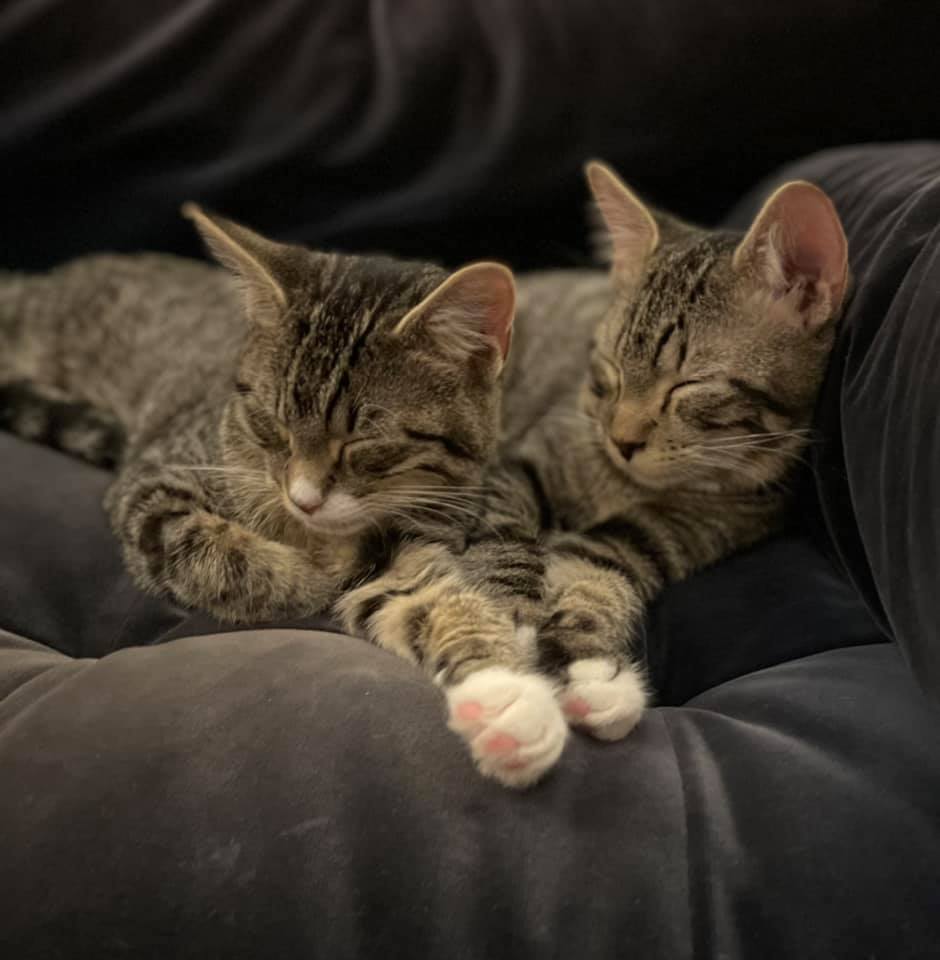
Why Foster?
- Foster Pets Learn They’re Loved — Watching an animal that has been in a shelter environment, or hurt, or abused, or all of the above enter your home is a magical, beautiful thing. Though they may not be settled yet they surely seem to know they are safe and loved.
- It’s (Usually) So Fun For Your Other Pets, Too — Foster kittens may end up snuggled close to a big pack of dogs, an otherwise lazy dog or cat may suddenly find new vigor playing with a new foster.
- You’re Saving Lives — Not only are you helping get animals adopted, but you are freeing up space at shelters for other animals in need.
- Fostering Will Make You Feel Great — It is truly remarkable watching a foster dog or cat transition from a skittish, scared little animal to trusting, flourishing member of a family. Fostering makes the animal feel better about their world and makes you feel great about yourself.
- Goodbye Is A Happy Ending — Don’t be put off fostering because you think it’ll be too hard when your sweetie gets adopted. It’s never easy to say goodbye to these beautiful souls, but seeing their happy ending makes it all worthwhile. And just when that chapter comes to an end there is another one waiting in the wings for a chance to be saved.
- And If You Really Fall In Love… Your foster is always available for you to adopt.
For more information on fostering, visit our website or contact us at foster@humaneloudoun.org
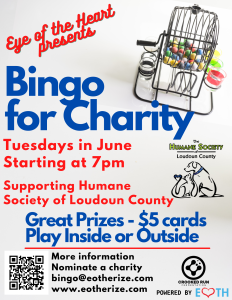
Come on down with family and friends to Crooked Run and Nectar Cocktail Bar in Sterling, VA, for a fun-filled evening of bingo, beer, cocktails, and good food! Each Tuesday in the month of June, HSLC will benefit 100% from all bingo cards purchased ($5 each). Win family-friendly prizes, including PAWSOME Blackout Bingo prizes! What a fun way to help animals in need!
How it works:
– Buy bingo cards from Crooked Run bartenders. Cards can be added to your tab.
– Cards are $5 each and can be used to play up to 4 games.
– All bingo proceeds go directly to the Humane Society of Loudoun County!
Come on down with family and friends to Crooked Run and Nectar Cocktail Bar in Sterling, VA, for a fun-filled evening of bingo, beer, cocktails, and good food! Each Tuesday in the month of June, HSLC will benefit 100% from all bingo cards purchased ($5 each). Win family-friendly prizes, including PAWSOME Blackout Bingo prizes! What a fun way to help animals in need!
How it works:
– Buy bingo cards from Crooked Run bartenders. Cards can be added to your tab.
– Cards are $5 each and can be used to play up to 4 games.
– All bingo proceeds go directly to the Humane Society of Loudoun County!